

4 min read
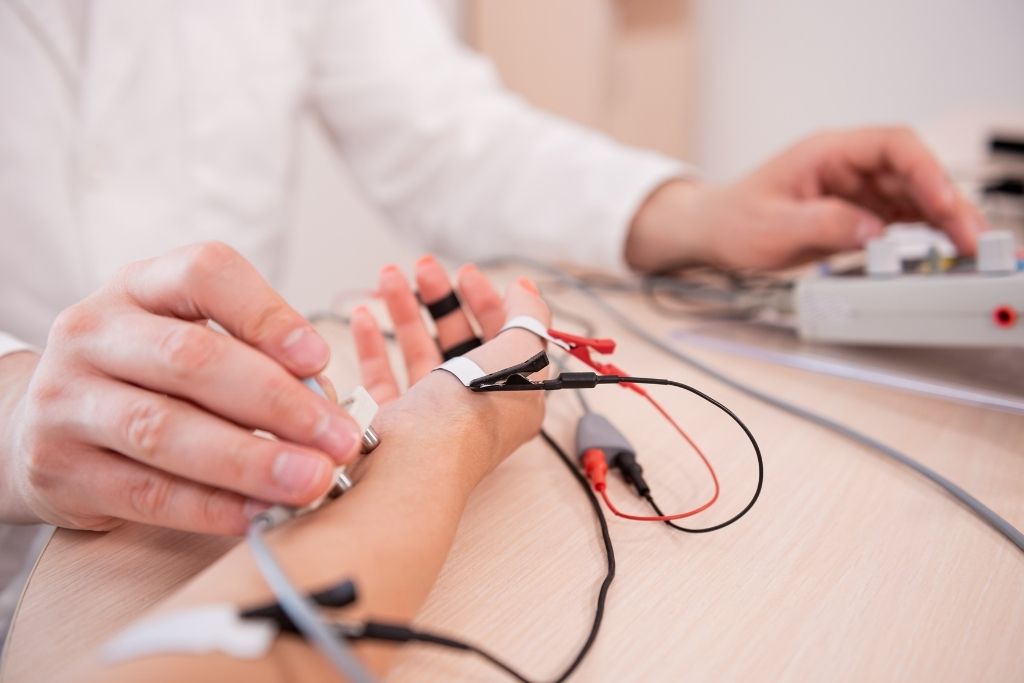
If you’re staring at your calendar thinking, “Please tell me this won’t be awful,” you’re not being dramatic. When people search “emg test painful”, they’re usually asking a deeper question:
Am I about to walk into something I can’t handle?
Here’s the honest answer you deserve: an EMG can be uncomfortable, and some moments may sting or pinch—but most people get through it just fine. And the biggest relief often comes from knowing exactly what happens, when it happens, and how long each sensation lasts.
Is an EMG Test Painful or Just Uncomfortable?
EMG pain vs discomfort: what most people report
Let’s answer the big question: Is an EMG test painful? Most people describe it as uncomfortable, not “I can’t handle this” painful. In other words: it can sting, pinch, or feel weird, but it’s typically quick and manageable.
People commonly describe:
- A brief pinch or stinging feeling when the needle electrode goes in.
- Short, zap-like pulses during the nerve stimulation (for the NCV/NCS portion).
- Mild soreness afterward at the insertion point(s).
So if you’re asking “does an EMG hurt?” the most accurate emotional translation is: it can be unpleasant in moments, but it’s usually tolerable—and it’s not a procedure most people regret doing.
Why pain levels vary from person to person
Two people can take the same test and report completely different experiences. That’s normal.
Your comfort level can change based on things like:
- Which muscles are tested (some areas are more sensitive than others).
- How many muscles are tested (more muscles = more brief insertions).
- Your personal pain tolerance and whether you’re already sore, inflamed, or anxious.
Anxiety and staying relaxed during the test
Here’s a truth nobody tells you loud enough: your nervous system amplifies what you fear.
When you’re tense, everything can feel sharper—like turning up the volume on a speaker you didn’t mean to blast. If you can do one thing for yourself, do this: breathe slowly and let your shoulders drop. You don’t have to be “perfectly calm.” Just a little softer in your body can help.
Test area and insertion site sensitivity
Some insertion points just feel more “ouch” than others. If a certain spot is sensitive, it doesn’t automatically mean your results will be “bad.” It can simply be that the area is more tender—or that muscle is already irritated.
What Happens During an EMG Test (Step by Step)
If you’ve been imagining a single long painful event, take a breath. An EMG is usually a series of very short moments, with breaks in between.
Also important: many providers describe EMG and nerve conduction testing as two different tests often done together for a fuller picture.
Electromyography (EMG): needle electrode portion
An EMG measures electrical activity in your muscles. A clinician uses a small needle electrode inserted into specific muscles to detect that activity.
Needle insertion: pinching, stinging, and pressure sensations
This is the part people fear most, so let’s be direct.
- You may feel a brief pinch or stinging when the needle goes in.
- You might feel a little pressure.
- Then it moves on.
And here’s something that surprises people (in a good way): it’s typically one insertion at a time—so you’re not dealing with multiple needles at once.
Electrical activity recording in muscles
Once the needle is in place, the test records electrical activity. Many people report little or no sensation from the recording itself—it’s mainly the insertion that you feel.
You may be asked to relax or gently move a muscle so the provider can see activity “at rest” and “with movement.”
Does an EMG Hurt More Than a Blood Test?
Needle electrode vs blood drawn: what feels different
This comparison comes up a lot: does an EMG hurt more than a blood test?
A simple way to think about it: the EMG needle goes into the muscle instead of a vein—so the sensation can feel unusual. Some people say it’s similar to a shot or blood draw, while others say it feels a bit different because of the muscle location.
So if blood draws make you nervous, you’re not alone—but it doesn’t mean you can’t do this.
What “soreness after” can feel like
After the test, you might feel muscle soreness at the insertion point(s). That’s commonly described as normal and typically short.
Some people also notice a small bruise at the insertion site.
What an EMG Can Help Diagnose (Why Your Doctor Orders It)
If you’ve been dealing with numbness, tingling, pain, or muscle weakness, you may feel like your body is sending mixed signals. Some days it’s fine. Other days it’s scary. An EMG is a way to get clearer answers.
Nerve-related causes: pinched nerves and nerve compression
EMG/NCV testing can help evaluate problems such as nerve compression or a pinched nerve.
Symptoms that lead to EMG testing
It’s not just “random testing.” Doctors often order EMG testing when symptoms won’t quit, such as:
- Tingling
- Numbness
- Muscle weakness
- Pain
Numbness, tingling, weakness, and nerve pain
If your arm goes numb or your foot tingles, it’s easy to spiral: “What if it’s something serious?” Testing helps your doctor sort out whether your symptoms point more toward a nerve issue, a muscle issue, or the connection between them.
Conditions commonly evaluated with EMG
EMG testing is commonly used to evaluate categories like nerve injury/compression, neuropathy, radiculopathy, and muscle disorders.
Peripheral neuropathy
Neuropathy may be evaluated when symptoms suggest the peripheral nerves aren’t communicating well.
Radiculopathy
Radiculopathy (often described as pinched nerves) can be part of what EMG helps assess.
Carpal tunnel syndrome
If the issue is in the wrist/hand, EMG/NCV testing may be used in cases like carpal tunnel syndrome.
Myopathy
EMG can also be used when a muscle disorder (myopathy) is suspected.
ALS (amyotrophic lateral sclerosis)
EMG is also used in the evaluation of certain neuromuscular diseases, including ALS.
How to Prepare to Make an EMG Easier
You can’t control every sensation, but you can control how prepared you feel walking in. And that alone reduces fear.
What to wear: comfortable clothing
Wear comfortable, loose clothing that allows easy access to the areas being tested.
Avoid lotion or cream on the skin
This matters more than people think: avoid lotion or cream the day of your test so electrodes and sensors can work properly.
Medications and safety questions to tell your provider
This is one of the best ways to protect your comfort and safety: share your medical history honestly.
Blood thinners and bleeding disorders
Tell your provider if you take blood thinners or have a bleeding disorder.
Skin infection, swelling, lymphedema concerns
If you have a skin issue in the area being tested, talk about it. Mild bruising or tenderness may happen, and EMG/NCV is generally considered low-risk.
Quick prep checklist (save this):
- Wear loose clothing
- Skip lotion/cream
- Bring a medication list
- Mention blood thinners/bleeding disorders
- Tell them about any skin problems in the test area
EMG Test Pain: Tips to Reduce Discomfort During the Exam
If you’re worried about emg test pain, these tips are simple—but they can change your whole experience.
Staying relaxed during needle insertion
You don’t need to “be brave.” You just need a plan.
Try this during each insertion:
- Inhale slowly through your nose.
- Exhale longer than you inhale.
- Let your shoulders drop as you exhale.
Communicating with the doctor during testing
You are not supposed to silently suffer. If something feels too intense, say so.
You’re allowed to say:
- “Can we pause for a second?”
- “That one spot is more sensitive—can you talk me through it?”
- “I need a quick break.”
What to expect if a spot feels more sensitive
Some muscles are naturally more sensitive, and certain locations can feel sharper than others.
If one spot feels worse, it doesn’t mean the whole test will feel that way. It’s often just that one muscle.
After the EMG: Soreness, Bruising, and Side Effects
Muscle soreness and bruising: what’s normal
Many people feel fine right away. Others notice:
- Mild soreness in the tested muscle(s)
- A small bruise at the insertion site
Recovery: what to do at home
Most people return to normal activities right after the test.
If you’re sore, treat it like a minor muscle irritation: gentle movement, and don’t poke at the sites.
Ice and over-the-counter pain medication (Tylenol)
If needed, some providers recommend ice and over-the-counter pain relief like Tylenol, following your clinician’s instructions.
When to call your healthcare provider
Mild soreness is common. But if something feels truly unusual—worsening swelling, increasing redness, or anything that worries you—follow up with your provider.
How Long Does an EMG Take and When Do You Get Results?
Typical time: 30 to 60 minutes
Many appointments take about 30 to 60 minutes, depending on how many muscles and nerves are tested.
Understanding normal vs abnormal results
Your doctor will interpret your results in the context of your symptoms.
In general:
- Normal results suggest muscle and nerve function are within expected ranges.
- Abnormal results may help explain nerve or muscle problems and guide next steps.
If you’re the type of person who spirals while waiting, it may help to ask: “When and how will results be shared with me?” Knowing the plan reduces stress.
EMG in Miami with Neurology Mobile
If you’re in Miami and you’re looking for a place that provides this kind of evaluation, Neurology Mobile offers EMG (electromyography) and nerve conduction testing (NCV/NCS) as part of its neurological diagnostic services. This means you can get the type of testing discussed in this article—focused on assessing nerve and muscle function—through a local team that specializes in neurodiagnostic exams.
Conclusion: is an emg test painful?
So, is an EMG test painful? For most people, it’s more uncomfortable than truly painful, with a few short moments that can sting, pinch, or feel like a quick zap—then it’s over. The best way to feel calmer is knowing what to expect, staying as relaxed as you can, and remembering that this test is often a key step toward real answers about tingling, numbness, weakness, or nerve pain.
Ready to stop guessing and start getting answers?
If you’re ready to stop guessing and start getting clarity, Neurology Mobile in Miami can help with EMG and nerve conduction testing.
👉 Contact Neurology Mobile in Miami today to schedule your evaluation (EMG test)
Frequently Asked Questions
Is an EMG test painful?
For most people, an EMG test is more uncomfortable than truly painful. The nerve conduction part can feel like quick, mild shock-like pulses, and the needle EMG part can feel like brief pinches or stings at each insertion. The important part is that these sensations are usually short-lived, happening in quick moments rather than nonstop. Some people feel mild soreness afterward at the needle sites, similar to a tender muscle, and it typically fades within a day or two. If you’re nervous, tell the clinician—staying relaxed and taking short pauses can make the experience feel much easier.
How long will I feel sore after an EMG?
If you feel soreness, it’s usually mild and short-lived—often like the tenderness you might feel after a shot or a small muscle poke. Some people have no soreness at all, while others notice it for a day or two. A small bruise at an insertion site can also happen. If you’re uncomfortable, gentle movement and simple aftercare (like ice) may help.
What should I avoid before an EMG?
Avoid putting lotion or cream on your skin the day of the test, since it can interfere with electrodes. Wear comfortable clothing and bring a list of medications. Also, tell your provider if you take blood thinners or have a bleeding disorder, and mention any skin issues in the area being tested.
What if I’m anxious and worried I’ll panic during the EMG test?
You’re not alone—this is one of the most common worries. A simple plan helps: slow breathing, relaxing your shoulders, and asking the clinician to talk you through each step. You can always request a pause. Knowing what sensations to expect (quick pulses and brief needle insertions) often reduces fear a lot.