

4 min read
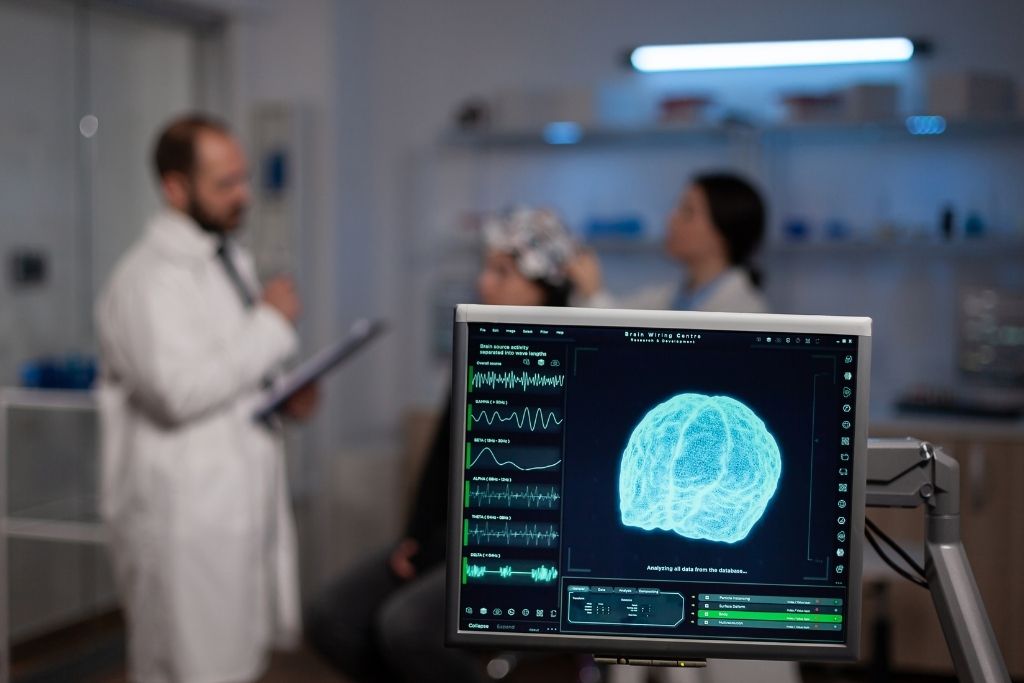
Have you ever wondered what is brain mapping used for when something feels “off” in your mind or body—but you can’t quite explain it? Maybe anxiety shows up out of nowhere. Maybe sleep won’t come, no matter how tired you are. Or maybe focus slips away the moment you try to grab it.
Here’s the twist: your brain may already be leaving clues—not in words, but in patterns of activity. Brain mapping is one way clinicians look at those patterns so the next step can feel less like guessing and more like a guided plan.
Brain Mapping in Simple Terms: What It Actually Measures
Brain mapping is a way to measure brain activity so clinicians can better understand how different parts of the brain are functioning. Depending on the situation, it may involve tools such as EEG, qEEG (quantitative EEG), or fMRI.
Think of it like turning on a soft light in a dark room. You’re not changing the room yet—you’re finally seeing what’s inside.
Brain activity and brainwave activity explained
Your brain communicates through electrical signals. Those signals create brainwave activity (sometimes written as brain wave activity). When brain mapping measures those signals, it looks for patterns that may relate to symptoms like stress, anxiety, depression, panic attacks, insomnia, or challenges with attention, focus, and concentration.
A simple metaphor: if your brain is an orchestra, brainwaves are the music. Brain mapping helps show whether one section is too loud, too quiet, or out of sync.
Delta, theta, alpha, beta, and gamma waves
Brain mapping often discusses brainwaves in ranges such as:
- Delta waves
- Theta waves
- Alpha waves
- Beta waves
- Gamma waves
You don’t need to memorize these names. The helpful takeaway is this: different brainwave ranges are linked to different brain states, like deep rest or alert thinking. Seeing how those ranges show up can help make symptoms feel more measurable and less mysterious.
How sensors/electrodes on the scalp collect data
In EEG-based mapping (including qEEG), clinicians place sensors—also called electrodes—on the scalp. These sensors record brainwave activity. They don’t “zap” your brain during the mapping. In many cases, this is described as non-invasive, meaning nothing is entering your body.
If you’re nervous about the test, a helpful way to picture it is this: it’s more like a microphone “listening” than a speaker “broadcasting.”
What brain networks and neurons have to do with mapping
Your brain is a massive web of neurons working together in brain networks. Even simple actions—like saying hello or moving a finger—depend on signals traveling through those networks.
So when a network is disrupted or out of balance, the effects can show up as changes in mood, attention, sleep, or movement. Brain mapping tries to make those patterns easier to see.
What Does Brain Mapping Show?
People often ask: what does brain mapping show?
In everyday terms, it can show:
- Which areas look overactive or underactive
- Signs of dysregulation (brain activity that appears out of typical balance)
- Patterns that may connect to specific symptoms
- In some approaches, results may be compared to a reference database of neurotypical results for similar ages
And if you’re thinking, “Okay… but what does that mean for me?”—you’re asking the right question.
Overactive vs underactive brain areas
An overactive area can feel like a smoke alarm that goes off when you toast bread—too sensitive, too reactive. An underactive area can feel like a dimmer switch turned too low—your brain is trying, but the output isn’t strong enough.
Brain mapping can help highlight these patterns so care decisions can be more targeted instead of one-size-fits-all.
Dysregulation patterns linked to symptoms
Many brain mapping discussions focus on brain dysregulation—when the brain isn’t operating within typical ranges in certain areas.
This matters because symptoms can overlap. Stress can look like attention problems. Sleep loss can mimic anxiety. Trauma can show up as irritability, numbness, or hypervigilance. A map can help connect the dots more clearly.
Real-time feedback and why it matters
Brain mapping is often paired with therapies that use real-time feedback, especially neurofeedback. The idea is simple: once you can see what your brain is doing, you may be able to practice shifting it—little by little—until better regulation becomes more natural.
It’s like learning balance on a bike. At first, you wobble. With feedback and practice, your system learns stability.
What Can Brain Mapping Diagnose (and What It Can’t)?
A very common search is: what can brain mapping diagnose?
Here’s the honest, helpful framing: brain mapping can support assessment by showing patterns linked to symptoms, but it’s not always treated as a standalone “label maker.” Results still need professional interpretation in the context of your history, symptoms, and clinical evaluation.
So where can it help?
Seizures and epilepsy patterns
Brain mapping and related technologies can be used in contexts involving seizures and epilepsy, where understanding brain activity patterns may support more precise clinical decisions.
If you’ve ever watched someone you love experience a seizure, you know how frightening it can feel. Tools that improve clarity and targeting can matter.
ADHD/ADD, attention, focus, and concentration findings
Brain mapping is often discussed in relation to ADHD/ADD and difficulties with attention, focus, and concentration. When someone says, “I’m trying—but my brain won’t cooperate,” mapping is sometimes used to look for patterns that might help guide more personalized support.
Anxiety, depression, stress, and panic attacks markers
Brain mapping is also commonly associated with symptoms like anxiety, depression, stress, and panic attacks. If your mind feels like it’s always on high alert—or like you’re carrying an invisible weight—mapping is sometimes used to identify where regulation may be off, so the plan can be more targeted.
PTSD, trauma, and the limbic system
Brain mapping is frequently discussed in connection with trauma and PTSD, often focusing on the limbic system—a core part of how the brain processes emotion and threat.
If trauma has ever made your body react as if danger is still present, even when life is safe now, you already understand why regulation matters. The hopeful idea here is: patterns can be trained.
Insomnia and sleep-related patterns
Insomnia shows up often in brain mapping conversations. If you’ve ever stared at the ceiling at 3:00 a.m.—exhausted but wide awake—you know sleep isn’t “just sleep.” It affects mood, memory, patience, and everything in between. Seeing brainwave patterns can help make sleep problems feel more measurable.
Autism-related signals (limits and careful interpretation)
Autism may also appear in discussions around brain mapping and personalized planning. It’s important to handle this carefully: autism is complex and personal. Mapping—if used—tends to be framed as one part of a broader picture, not a simple yes/no answer.
Parkinson’s disease, tremors, and movement disorders
Brain mapping is also associated with advanced neurological care involving Parkinson’s disease, tremors, and other movement disorders, where precision can play a major role in treatment targeting.
Why brain mapping supports assessment—not a standalone label
If you take one idea from this section, make it this:Brain mapping can show patterns. Professionals interpret what those patterns mean.
It can help reduce guesswork and support a clearer, more personalized direction—especially when symptoms overlap.
Benefits of Brain Mapping for Treatment Planning
People also search for the benefits of brain mapping, and the theme is pretty consistent: clarity, personalization, and precision.
When you can see patterns instead of guessing, the plan can feel more grounded.
Personalized / customized treatment and protocols
One of the biggest benefits of brain mapping is the ability to build personalized or customized treatment protocols. Two people can both say, “I feel anxious,” yet their brain activity patterns may look very different. Mapping can support a plan that fits your brain, not a generic template.
How qEEG and EEG can guide next steps
EEG measures electrical brain activity. qEEG takes EEG data and processes it to highlight patterns, often using comparisons that can make unusual activity stand out more clearly.
That structure is part of why brain mapping can feel different from trial-and-error: it can provide a more specific starting point for planning.
When fMRI is used and how it differs
Brain mapping isn’t always EEG-based. fMRI is another technology used to understand brain function in a different way. The important point is that brain mapping isn’t a single test—it’s a category of methods used depending on the goal.
Tracking rehabilitation and recovery over time
Brain mapping is also discussed as a way to track changes over time—especially in rehabilitation and recovery settings. When progress feels slow, having measurable checkpoints can be motivating and reassuring.
Brain Mapping and Therapy Options It Can Guide
So what happens after the map?
Often, brain mapping is used to guide brain mapping therapy options like neurofeedback and neurostimulation, especially when the goal is better regulation and symptom relief.
Neurofeedback: training brainwave activity with feedback
Neurofeedback uses real-time feedback about brain activity to help your brain learn healthier patterns over repeated sessions.
A simple way to imagine it: neurofeedback is like a mirror for brain activity. The brain “sees” itself and practices adjusting, gradually building better stability.
Neurostimulation: where it may fit
Some approaches use mapping results to guide neurostimulation as part of a plan. The key idea isn’t the buzzword—it’s the intention: use the map to choose a more precise support strategy.
Non-invasive approaches and what “non-invasive” means
A common reassurance is that brain mapping is non-invasive. For many people, that alone reduces fear.
If you’re hesitating because you worry it will hurt, the usual framing is: sensors on the scalp record activity; they don’t cause pain during mapping.
What a typical treatment protocol might include
A common flow looks like this:
- Measure brain activity (often EEG/qEEG; sometimes other tools like fMRI).
- Identify patterns of dysregulation or overactive/underactive areas linked to symptoms.
- Create a customized treatment protocol, often involving neurofeedback and/or neurostimulation.
- Track changes and adjust over time.
Want it in one glance?
Brain mapping at a glance (table)
| Tool / Approach | What it measures | What it’s commonly used for |
| EEG | Electrical brain activity | Measuring brainwave patterns |
| qEEG | EEG data processed to highlight patterns | Identifying dysregulation; guiding more personalized protocols |
| fMRI | Brain function via a different method | Understanding brain function in specific contexts |
| Brain mapping in advanced care | Mapping used for precision targeting | Supporting precision in complex neurological care |
Brain Mapping for Surgery and Advanced Care
Brain mapping isn’t only about mood or attention. It can also support neurological surgery and other advanced care where precision is everything.
Neurological surgery context and neurosurgeons’ goals
In surgical contexts, mapping technologies can help locate where symptoms originate and support more precise treatment—aiming to protect function and improve quality of life.
A helpful metaphor: surgery is like careful road work in a busy city. You want to fix the problem without shutting down everything around it.
Tissue-stimulating electrodes (where relevant)
In some advanced treatments, mapping can support precise placement of tissue-stimulating electrodes, which may help relieve symptoms such as seizures and tremors.
There’s also a powerful human side to this: in precision-focused procedures, what matters isn’t only what shows up on a screen—it’s preserving what matters most in a person’s life.
Neurology Services in Miami with Neurology Mobile
If you’re searching for what brain mapping is used for, you’re usually looking for one thing: clearer answers about how your brain is functioning—and what your care team can do with that information. At Neurology Mobile in Miami, the services most aligned with this article focus on measuring brain activity and mapping/monitoring key brain pathways when precision matters.
Electroencephalography (EEG)
EEG measures brainwave activity using sensors placed on the scalp. It helps capture patterns of brain activity that can support evaluation when symptoms may involve the brain’s electrical signals (for example, episodes that don’t feel normal, “blank outs,” or seizure-like events). If you’ve been living with uncertainty, EEG can be a first step toward real clarity.
Brain Cortex Mapping (BCM)
Brain Cortex Mapping (BCM) is a specialized form of mapping focused on precision. It’s used when it’s important to understand how specific brain areas relate to critical functions—so decisions can be made with greater confidence and care.
Evoked Potentials for Functional Pathway Mapping (SSEP, MEP, BAEP)
These tests help map and monitor how signals travel through important pathways connected to the brain and nervous system: SSEP (sensory pathways), MEP (motor pathways), and BAEP (auditory/brainstem pathways). In practical terms, they support functional mapping and monitoring—especially in higher-stakes clinical settings where protecting function is the priority.
Ready to stop guessing and start getting answers?
If you’re in Miami and you want help choosing the right brain-mapping–related test, contact Neurology Mobile to discuss scheduling and the next best step.
👉 Contact Neurology Mobile in Miami today
Frequently Asked Questions About Brain Mapping
1) What is brain mapping used for?
Brain mapping is used to measure brain activity and brainwave activity so clinicians can spot patterns—like overactive or underactive areas—that may relate to symptoms. Many people use it to get clearer direction when they’re dealing with issues like anxiety, depression, insomnia, attention problems, or seizure-like episodes. It can also support more precise planning in advanced neurological care where protecting function matters.
2) What does brain mapping show?
Brain mapping can show how different areas of the brain are functioning and whether there are signs of dysregulation. In simple terms, it may highlight patterns that look unusually high or low compared to typical expectations. This can help explain why symptoms feel confusing or inconsistent—and it can support a more personalized plan instead of trial-and-error.
3) What can brain mapping diagnose?
Brain mapping can support assessment, but it’s not always used as a standalone “one test, one diagnosis” tool. It may help evaluate conditions where brain activity patterns matter—such as seizure-related concerns—or support planning for symptoms tied to mood, sleep, attention, or trauma-related dysregulation. A qualified professional interprets the results alongside your symptoms and history.
4) What are the benefits of brain mapping?
The biggest benefits of brain mapping are clarity and personalization. Instead of guessing, mapping can help identify which patterns might be driving symptoms and guide a more targeted approach—such as neurofeedback-based brain mapping therapy or other care decisions. It can also help track changes over time, which is motivating when progress feels slow.
5) How can I prepare for a neurology appointment?
Bring a short symptom summary: what you feel, when it started, how often it happens, and anything that triggers or relieves it (sleep changes, stress, activity). If you can, list current medications and any prior test results. Even a few notes on your phone can help your neurologist spot patterns faster and decide whether you need tests like EEG, EMG/NCT, imaging, or cognitive testing.